
At Pro House Demolitions Brisbane, we handle the whole job from permits, asbestos checks, disconnections, to site cleanup, so your project runs safely from start to finish.
This guide explains what house demolition means, when it’s the right choice, how it’s done, how much it costs, and what to expect once the old structure is gone.
What Is House Demolition?
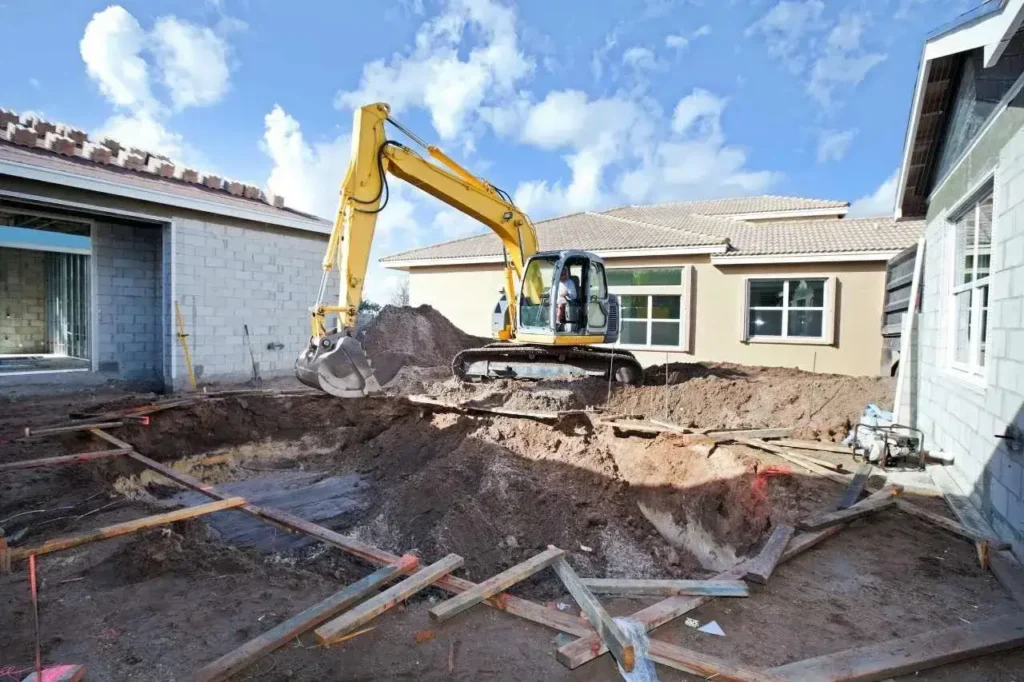
House demolition, at its core, is the controlled dismantling of a structure so the land can begin a new chapter. Much like the universe clearing old matter to make room for new formations, demolition removes what no longer serves a purpose and prepares the space for something better. In Brisbane, this process is carefully governed by the Brisbane City Council, WHSQ, and EPA Queensland, ensuring safety, order, and environmental responsibility at every step.
A home may be removed completely or only in sections, depending on the needs of the new build. Full demolition clears the entire site, while partial demolition preserves selected parts of the structure. Machines like excavators perform most of the work, bringing precision and efficiency to the job, while hand tools allow careful removal when the structure or neighbourhood requires it.
For many Brisbane homeowners, demolition becomes the logical choice when a house reaches the end of its useful life, when repairs outweigh value, when asbestos hides within old walls, or when modern design demands a new beginning. This transformation is not chaotic but deliberate: a step-by-step process involving inspections, service disconnections, permits, recycling plans, and final site clearance.
Residential vs Commercial Demolition: What’s the Difference?
Residential demolition is the removal of homes or small buildings using smaller machines and simple safety controls, while commercial demolition handles larger structures like shops, offices, and factories and needs bigger crews, more permits, and stricter safety rules.
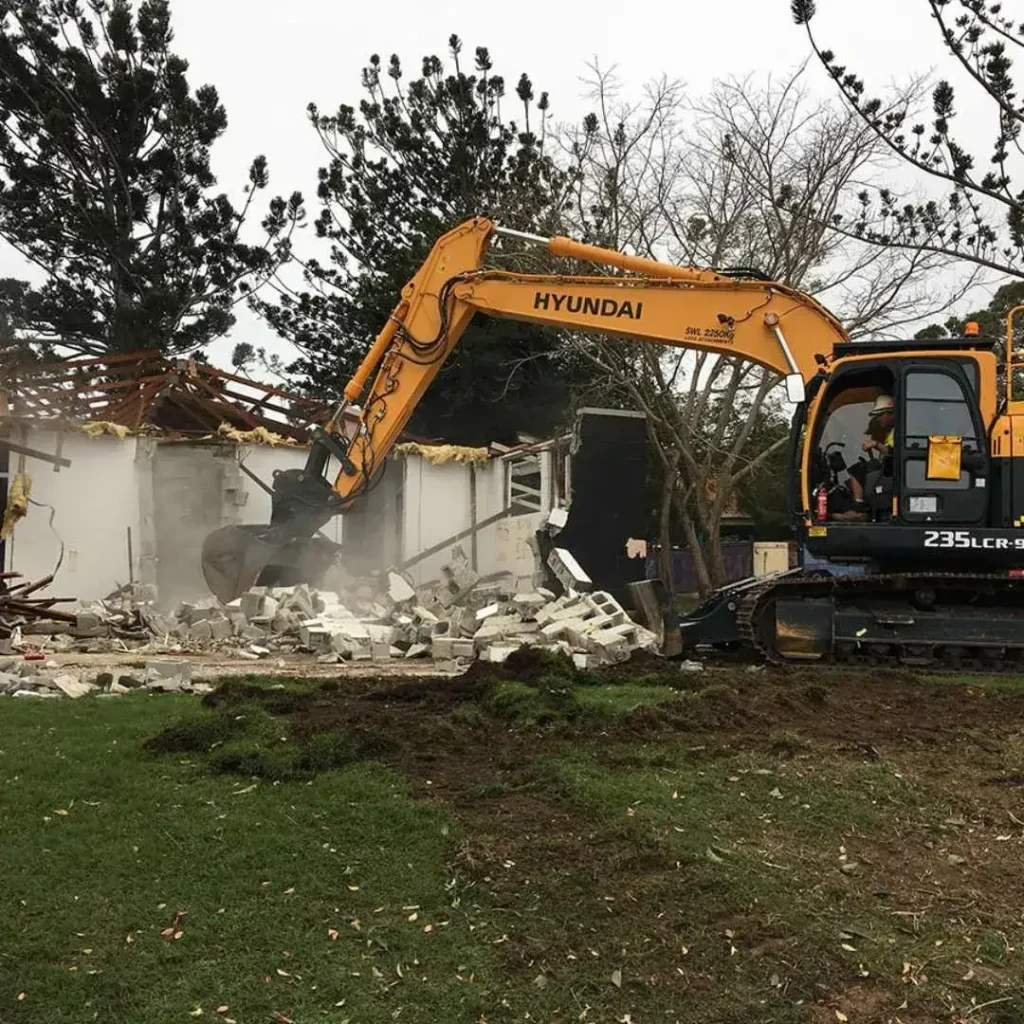
Residential and commercial demolition may seem alike on the surface, but they exist on different scales, much like comparing a single star to a galaxy. Residential demolition, common across Brisbane, deals with homes and small structures. These smaller buildings require lighter machines, simpler safety steps, and a focused plan shaped around Brisbane City Council, WHSQ, and EPA rules. It is a controlled event—precise, predictable, and designed for the tight spaces of suburban streets.
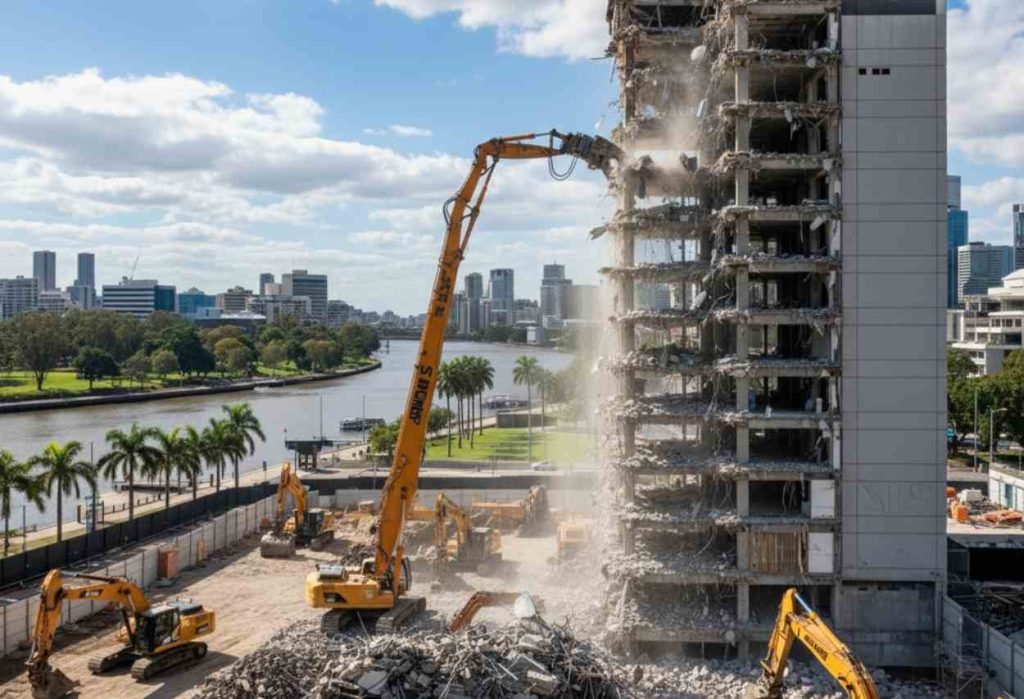
Commercial demolition, however, operates on a far larger spectrum. Here the structures: factories, warehouses, offices, and multi-storey buildings, stand with greater mass and complexity. Bringing them down safely requires stronger forces: large excavators, cranes, engineered safety systems, and multiple layers of approval. The energy involved is higher, the risks greater, and the planning far more intricate.
Just as the laws of physics guide celestial events, demolition follows its own strict rules to maintain safety and order. Residential demolition is a localised transformation, clearing the way for new homes and better designs. Commercial demolition reshapes entire sites, making room for new industries, new workplaces, and new possibilities.
In the end, the difference between residential and commercial demolition is one of magnitude. One reshapes a single property; the other reshapes a landscape. Yet both depend on the same core principles—control, safety, and precise execution to turn old structures into the foundations of future growth.
When Does It Make Sense to Demolish a House?
It makes sense to demolish a house when repairs cost more than rebuilding, when the structure is unsafe, when asbestos is widespread, or when you want to redevelop the land for a new home, subdivision, or modern layout.
There comes a moment when a structure reaches the end of its usefulness, much like stars that exhaust their fuel and collapse to make way for new cosmic forms. A house is no different. Demolition becomes the logical choice when the energy required to repair an ageing home exceeds the value of creating something new. This happens often in Brisbane, where older timber and fibro homes carry structural fatigue, hidden asbestos, or layouts that no longer suit modern life.
A building showing deep cracks, sinking foundations, or widespread asbestos can be compared to a system nearing instability. The forces holding it together weaken, and the most rational step is to replace it with a safer and more efficient design. This is why many homeowners choose demolition when planning a fresh build, a subdivision, or a redevelopment that makes better use of the land.
In the world of physics, transformation is essential for progress. Demolition follows the same principle. It clears what is no longer safe or efficient and opens space for something stronger, cleaner, and more aligned with today’s needs, whether that is a modern home, an energy-efficient design, or a complete re-imagining of the property.
In this sense, deciding when to demolish a house is not just a question of cost. It is an evaluation of potential. When the old structure limits what the site can become, demolition becomes the catalyst that reshapes the future of the land.
Brisbane Homeowner Checklist
- Cracked foundations or leaning walls
- High asbestos content
- Cost of repair exceeds 50% of rebuild cost
- Desire to subdivide or redevelop the block
Demolition vs Renovation in Brisbane: Which Is Better Value?
Demolition is better when the home needs major repairs or full structural work, while renovation is better value when the house is still solid and only needs updates, upgrades, or layout changes.
| Factor | Renovation | Demolition |
|---|---|---|
| Cost | Lower for minor fixes | Higher upfront, but adds long-term value |
| Time | Weeks to months | Often under 2 weeks |
| Resale Potential | Limited by the old design | Fresh new build appeal |
| Council Process | Basic permits | Full demolition approval required |
Choosing between renovation and demolition is similar to choosing whether to repair an ageing system or create a new one. In physics, when a structure loses stability, adding more energy to hold it together becomes less efficient than rebuilding it entirely. Homes behave in the same way. Demolition becomes the logical path when the structure is damaged beyond economical repair, or when its design limits what the property can become.
Renovation, by contrast, is suitable when the foundation of the home remains strong. Like adjusting the variables in a working model, you refine what already exists—upgrading rooms, improving energy efficiency, or reshaping internal space. The core remains intact.
In Brisbane, many older houses reach a “tipping point,” where the effort required to restore them outweighs the value gained. Foundations may shift, asbestos may be widespread, or the layout may no longer serve the needs of modern living. In those cases, demolition is not destruction; it is renewal. It clears the constraints of the past and allows the creation of something more stable, efficient, and aligned with future needs.
Renovation, however, preserves what still works. It keeps the essence of the original home while allowing it to evolve. Much like modifying a working theory, renovation adjusts the home without replacing its entire structure.
In both choices, the goal is the same: a safer, more functional home. The path you choose depends on the condition of the structure and the vision you have for the property.
Advantages and Disadvantages of House Demolition
House demolition has clear advantages, such as removing unsafe homes, clearing asbestos, and allowing a modern rebuild, but it also has disadvantages like higher upfront costs, noise, and the need for council permits.
| Advantages | Disadvantages |
|---|---|
| Removes unsafe or damaged homes | Can be noisy and disruptive |
| Allows modern home designs | Needs council permits |
| Boosts property value | Higher initial cost |
| Removes asbestos safely | Creates waste to manage |
Every structure, much like every system in our universe, has a life cycle. House demolition marks the moment when a building reaches the limits of what it can safely offer. Its advantages and disadvantages mirror the balance between destruction and renewal that shapes the cosmos itself.
The advantages of demolition are rooted in transformation. Removing an unstable or asbestos-filled home allows the creation of a stronger, more efficient structure. In Brisbane, where older houses often carry hidden weaknesses, demolition clears the site for modern designs, higher energy efficiency, and safer living conditions. It is the architectural equivalent of clearing cosmic dust so new stars can form.
Yet, demolition carries disadvantages as well. The process demands higher upfront costs, produces noise and dust, and must follow strict rules set by Brisbane City Council, WHSQ, and EPA Queensland. These rules may seem limiting, but they provide the order needed to keep the process safe, just as physical laws provide order in the universe.
When the structure is too damaged, when asbestos spreads through its walls, or when repairs exceed the cost of rebuilding, the benefits of demolition outweigh the temporary disruption. It becomes a rational act of renewal, a chance to replace the failing structure with something more resilient and aligned with the needs of the future.
In this sense, demolition is not simply the end of a house. It is the beginning of a new design, a new build, and a new chapter for the land it rests on.
What Happens After Demolition: Preparing for a New Build
After demolition, the site is cleared, levelled, and checked so it’s safe for your new build. You’ll need soil tests, boundary checks, and new building permits before construction can begin.
The end of a structure is not the end of the story. Much like a star that collapses and leaves behind the elements for new worlds to form, a demolition clears the ground so a new creation can take shape. What remains after the machines fall silent is a landscape filled with potential.
Once the house is removed, the site is levelled, cleared of debris, and examined for safety. This stage is critical, for the stability of any future structure depends on the integrity of the ground beneath it. In Brisbane, a soil test acts much like a scientific measurement, revealing the unseen conditions that determine how your new home must be built. Boundary checks ensure the new design aligns with the physical limits of the property, just as celestial bodies follow their own predictable paths.
Before the next phase begins, new building permits must be secured from Brisbane City Council. These approvals create order and prevent structural or environmental risks, functioning much like the laws of physics that govern the universe.
In this sense, what happens after demolition is a transition from one state to another. The old house has been removed, but the foundations of the next home, legal, structural, and physical are now being prepared. It is a moment of quiet transformation, where the possibilities of the future begin to take form on a cleared and ready site.
Brisbane Regulations for House Demolition
Demolition in Brisbane is controlled by the Brisbane City Council. You’ll need:
- A demolition permit
- Asbestos removal approval, if needed
- Zoning and heritage checks
- A waste management plan approved by the EPA Queensland
Typical approval takes 2 to 4 weeks, and council permit fees usually range from $400 to $900, depending on the property zone.
Step-by-Step Demolition Process
The house demolition process in Brisbane usually takes 4 to 8 weeks, from the first inspection to a clean, level site ready for your new home. Each step is planned so the work is safe, legal, and smooth for you as the homeowner.
Here is how the typical Brisbane house demolition process works:
| Step | Description |
|---|---|
| 1. Inspection | Assess the home and check for asbestos |
| 2. Permits | Apply through the Brisbane City Council |
| 3. Disconnections | Turn off water, gas, and power |
| 4. Site Preparation | Clear access and mark property lines |
| 5. Demolition | Use machines or manual tools to remove the home |
| 6. Waste Removal | Recycle materials and dispose safely |
| 7. Site Clearance | Level the ground for the next build |
- Inspection and Site Check
A demolition contractor visits your property, checks the home, and looks for things like asbestos, structural damage, and access for machines. This helps plan the safest and most cost-effective way to bring the house down. - Permits and Approvals
The contractor applies for demolition permits through Brisbane City Council. If asbestos is present, they also organise approvals under WHSQ and EPA Queensland rules. This step keeps everything compliant with local laws. - Service Disconnections
Before any work starts, all services are safely disconnected, including:- electricity
- gas
- water
- NBN or phone
This prevents accidents during demolition.
- Site Preparation
Fences, trees (if approved), sheds, and other small structures may be removed or shifted to create room for machines. The team sets up safety barriers and access points for trucks and excavators. - Demolition Work
Using excavators and other machinery, the house is taken down in a controlled way. The team follows a plan to protect nearby properties and manage dust and noise. - Waste Removal and Recycling
Rubble, timber, bricks, metal, and concrete are sorted. Wherever possible, materials are recycled to reduce landfill waste. Hazardous materials like asbestos are handled by licensed professionals and disposed of safely. - Site Levelling and Final Clearance
The ground is levelled, loose debris is removed, and the site is prepared for your builder. You may receive a site clearance certificate to confirm the property is ready for the next stage.
Mechanical vs Manual Demolition
Mechanical demolition uses machines like excavators and is fast and cost-effective, while manual demolition uses hand tools and is better for small, fragile, or heritage homes where parts must be removed with care.
The way a house is taken down reflects the same balance between force and precision found throughout the universe. Mechanical demolition represents the power of large-scale energy – machines like excavators and bulldozers applying controlled force to dismantle a structure quickly and efficiently. For most modern Brisbane homes, this method is the logical choice, as it uses mass and momentum to overcome the resistance of timber, brick, and concrete in a predictable way.
But not all structures can be treated with such broad strokes. Manual demolition is the opposite approach: a careful, deliberate process, using hand tools instead of heavy machinery. It resembles the work of a scientist examining delicate systems, where precision matters more than speed. Heritage homes, fragile buildings, and tight suburban blocks require this gentler method because even a small miscalculation could damage features that can never be replaced.
In essence, the choice between mechanical and manual demolition mirrors the choice between using a telescope to view galaxies or a microscope to study atoms. Both methods reveal the same world, but each requires a different scale of force and attention.
Mechanical demolition reshapes the site with power and efficiency. Manual demolition preserves what is unique, valuable, or fragile. Together, they form the full spectrum of demolition methods in Brisbane—one defined by strength, the other by precision, each governed by the same underlying goal: transforming what exists so something new can take its place.
House Demolition Costs in Brisbane
Most house demolitions in Brisbane cost between $12,000 and $40,000, with an average price of $16,000 to $17,000 for a standard job. Prices are usually worked out using per-square-metre rates of $40 to $150 per sqm.
| Type of Home | Average Cost per m² | Estimated Total Cost |
|---|---|---|
| Small timber home | $40 – $80 per m² | $12,000 – $20,000 |
| Brick veneer home | $80 – $120 per m² | $20,000 – $30,000 |
| Large or two-storey home | $100 – $150 per m² | $30,000 – $40,000+ |
The final cost depends on the size of your home, the materials used, how easy the site is to reach, and whether asbestos is found during the inspection.
Suburbs like Carindale, Wynnum, and Paddington may cost more due to access limits, traffic, and council zoning.
Safety Measures & Legal Responsibilities
All demolition contractors in Brisbane must follow the WHSQ Queensland safety standards. This includes safety gear, exclusion zones, and licensed supervision.
Asbestos removal must be done by licensed professionals under EPA Queensland rules. Fines apply for unsafe handling or illegal dumping.
Common Mistakes to Avoid
Common house demolition mistakes include skipping permits, doing DIY asbestos removal, ignoring waste planning, and hiring unlicensed contractors. These mistakes can delay your project, increase costs, and create serious safety and legal risks.
1. Skipping Permits
Demolishing without council permits is one of the biggest mistakes homeowners make. Brisbane City Council requires demolition approval, and skipping this step can lead to delays, stop-work orders, or fines.
Why it matters:
Permits make sure the job is legal and safe. Without them, you can’t start demolition or rebuild your new home.
2. DIY Asbestos Removal
Trying to remove asbestos yourself is dangerous and illegal. Older Brisbane homes often contain asbestos in walls, ceilings, roofing, and flooring. Only licensed professionals can remove and dispose of it safely.
Why it matters:
DIY asbestos removal exposes you and your neighbours to harmful fibres and can lead to large fines from WHSQ and EPA Queensland.
3. Poor Waste Management
Not planning for waste and debris removal can delay the project and raise costs. Houses produce bricks, concrete, timber, metal, and sometimes hazardous waste that must be sorted and disposed of properly.
Why it matters:
EPA Queensland requires proper disposal. Poor planning can lead to extra truckloads, unexpected fees, and longer project timelines.
4. Hiring Unlicensed Contractors
Choosing an unlicensed contractor to save money usually leads to unsafe practices, poor workmanship, and legal issues.
Why it matters:
Only QBCC-licensed demolition contractors are allowed to demolish homes in Queensland. Unlicensed work can void insurance and breach council rules.
5. Not Disconnecting Services Early
Forgetting to disconnect gas, electricity, or water can stop the demolition team from starting work.
Why it matters:
Live services create major safety risks and slow down demolition by several days or even weeks.
Preparing Your Property for Demolition
Before demolition, you must clear the home, disconnect gas, electricity and water, notify neighbours, remove personal items, and take photos for insurance to make sure the site is safe and ready for work.
Getting your property ready is an important step before the demolition team arrives. Proper preparation helps keep the site safe, avoids delays, and makes sure your demolition follows Brisbane City Council, WHSQ, and EPA Queensland rules.
1. Clear Out the Home
Remove all personal items, furniture, appliances, and rubbish. Anything left inside the home will be demolished with the building.
Why it matters:
This protects your belongings and allows the demolition crew to work safely.
2. Disconnect All Services
Make sure all utilities are turned off by licensed professionals, including:
- electricity
- gas
- water
- NBN or phone lines
Why it matters:
Active services create safety hazards and can delay demolition by days or weeks.
3. Notify Your Neighbours
Let nearby neighbours know the demolition date and expected noise.
Why it matters:
This avoids complaints, keeps relationships smooth, and helps with access and parking.
4. Remove Fixtures or Salvage Items
If you want to keep certain windows, doors, tiles, or heritage pieces, remove them before demolition starts.
Why it matters:
Mechanical demolition moves fast, saved items must be taken out beforehand.
5. Take Photos for Insurance Records
Take clear photos of the home, fences, and nearby structures.
Why it matters:
These photos are helpful for insurance claims if anything unexpected happens during the project.
6. Provide Access for Machines
Move parked cars, bins, garden items, or anything blocking the driveway and side access.
Why it matters:
Excavators, trucks, and waste bins need clear space to enter and work safely.
How to Choose the Right House Demolition Contractor
Choose a QBCC-licensed demolition contractor with full insurance, clear written quotes, strong safety records, and experience handling Brisbane City Council permits, asbestos removal, and waste management.
Choosing the right demolition contractor is one of the most important steps in your project. A good contractor keeps your home, neighbours, and property safe while making sure every part of the demolition follows Brisbane City Council, WHSQ, and EPA Queensland rules. The right team will also save you time, money, and stress.
Here’s what to look for when hiring a demolition contractor in Brisbane:
1. QBCC Licence
Always choose a contractor who is fully licensed by the Queensland Building and Construction Commission (QBCC).
2. Full Insurance Coverage
Make sure the contractor has:
- public liability insurance
- asbestos insurance (if needed)
- worker safety insurance
3. Clear, Detailed Quotes
Ask for a written quote that includes:
- demolition cost
- asbestos testing and removal (if required)
- waste removal
- service disconnections
- permit fees
- site cleanup
4. Strong Safety Records
Choose contractors with proven WHSQ safety compliance, good reviews, and experience demolishing homes in Brisbane suburbs.
5. Asbestos Experience
If your home was built before 1990, asbestos may be present. Choose a contractor who works with licensed asbestos removalists.
6. Good Communication
A reliable contractor keeps you updated, explains each step, and answers questions clearly.
House Demolition for Investment and Redevelopment
From an investor’s point of view, a block of land is more than its present structure. It holds potential; much like the early universe held the seeds of galaxies long before they formed. Demolition is the act of clearing the old matter so a new, more efficient structure can emerge.
Across Brisbane, investors use demolition to reshape properties into higher-value forms: a modern home, a duplex for dual income, or a set of townhouses designed to meet the needs of a growing population. Removing an ageing or damaged home is not wasteful—it is the beginning of a transformation, where unused potential becomes tangible value.
But before the new structure can take shape, the land must be understood. Brisbane City Council zoning, overlays, and subdivision rules act like the physical laws that govern what is possible. A block in a character-protected area behaves differently from one in a standard residential zone. Some areas allow multiple dwellings; others restrict changes to preserve the identity of the neighbourhood. Understanding these rules is essential for predicting the future form of your development.
Older Brisbane homes often contain asbestos, a hidden hazard like unstable particles requiring careful removal. Instead of trying to renovate around it, demolition provides a clean and controlled environment, allowing new construction to rise without the constraints of outdated materials.
For developers and builders, a cleared site is a blank canvas, a stable foundation where design, efficiency, and market demand can align. The new structure can be shaped for higher energy efficiency, better land use, and stronger long-term value.
In this way, house demolition for investment is not just the end of a building. It is the beginning of a more deliberate future, one where the land is used not for what it was, but for what it can become under the right conditions and vision.
Demolition for Asbestos Removal and Health Safety
In the world of physics, some particles remain harmless until disturbed. Asbestos behaves in much the same way. Hidden within walls, ceilings and roofing of Brisbane homes built before 1990, it rests quietly until renovation or damage disrupts its fibres and releases them into the air. Once airborne, these fibres behave like microscopic threats, invisible but capable of causing long-term harm.
This is why demolition becomes a controlled scientific process when asbestos is involved. Licensed handlers, trained under the strict rules of WHSQ and EPA Queensland, work like researchers dealing with unstable materials. They follow careful procedures: isolating the area, wearing protective gear, and removing asbestos in sealed, regulated stages to prevent any fibres escaping into the environment.
The demolition site becomes a laboratory of safety protocols. Waste is wrapped, labelled, and transported to approved facilities, ensuring that every step complies with the laws designed to protect human health. A final clearance certificate confirms that the site is safe, clean of hazardous material and ready for the new structure that will replace the old one.
Attempting to renovate an asbestos-filled home introduces unpredictable risk, much like tampering with an unstable system without understanding its behaviour. Demolition, by contrast, provides order. It allows asbestos to be removed completely and safely, clearing the way for a new build without the dangers hidden within the original structure.
In this sense, demolition for asbestos removal is not destruction but protection, an intelligent, measured act that safeguards the people who will live, work, and walk through the space long after the old home is gone.
Timeline Overview — From Planning to Clearance
Most Brisbane demolitions take 4 to 8 weeks from start to finish.
| Stage | Average Duration |
|---|---|
| Council Approvals | 2 to 4 weeks |
| Demolition Work | 3 to 7 days |
| Site Cleanup and Inspection | 1 to 2 weeks |
Total timeline: Around 1 to 2 months, depending on approvals and site access.
Conclusion
House demolition in Brisbane is a carefully managed process that opens the door to a fresh start. With the right planning, permits, and licensed experts, you can transform an old or unsafe home into a clean site ready for your dream build.
Pro House Demolitions Brisbane makes the process simple, safe, and fully compliant from inspection to site clearance.
Ready to start your demolition project in Brisbane? Contact Pro House Demolitions Brisbane today for a free quote and site assessment.
FAQs
Can I live in my property while demolition work is happening?
It’s the safe removal of a home so the land can be reused or rebuilt. In Brisbane, it must follow council and WHSQ rules for safety and compliance.
How much does house demolition cost in Brisbane?
It usually costs between $12,000 and $40,000, depending on size, materials, and site access.
How long does house demolition take in Brisbane?
Most projects take 4 to 8 weeks, including permits, demolition, and site clearance.
What should I check in a demolition quote?
Look for full details on permits, asbestos removal, insurance, and waste management. Avoid vague or low-cost quotes that skip compliance.